
What to Expect From Multi-Engine Rating Training in the Baron B55

Published by:
Jessica Ward
Published on:
Updated on:
Read time:
6 min read
Picture your first engine-failure drill in a twin. You are climbing out, your instructor pulls one throttle back, and the airplane starts to yaw. Your feet find the rudder, your hands work through power, pitch, and the checklist, and for the first time you feel why multi-engine flying is its own skill. That moment is what multi-engine rating training is built around.
If you already fly single-engine airplanes and want the next rating, the good news is that the path is short and focused. Here at High Tide Aviation, we train multi-engine students in our Beechcraft Baron B55 with a G500 glass panel, in a program built to be completed over one to two weeks. This guide walks you through what to expect, from the first conversation to the checkride.
Make Sure You Are Ready Before Day One
Our multi-engine rating program is an add-on to a certificate you already hold. Before you start, you need:
- At least a Private Pilot certificate. If you are still working on it, our private pilot program is the place to start.
- A valid FAA medical certificate. Our guide to student pilot medical certificates covers the basics.
- A solid grasp of single-engine operations. Multi-engine techniques build on the habits you already have.
The process starts with an initial assessment, where we talk through your current certificate, your experience, and your goals. From there, we build a training schedule that fits the one-to-two-week intensive format, so the skills stay fresh from lesson to lesson.
Meet the Airplane You Will Train In
The Baron B55 is a proven piston twin, and the G500 glass panel puts modern displays in front of you while you learn to manage two engines. If you want the full story on why we chose it, read why we train in the Beechcraft B55 Baron.
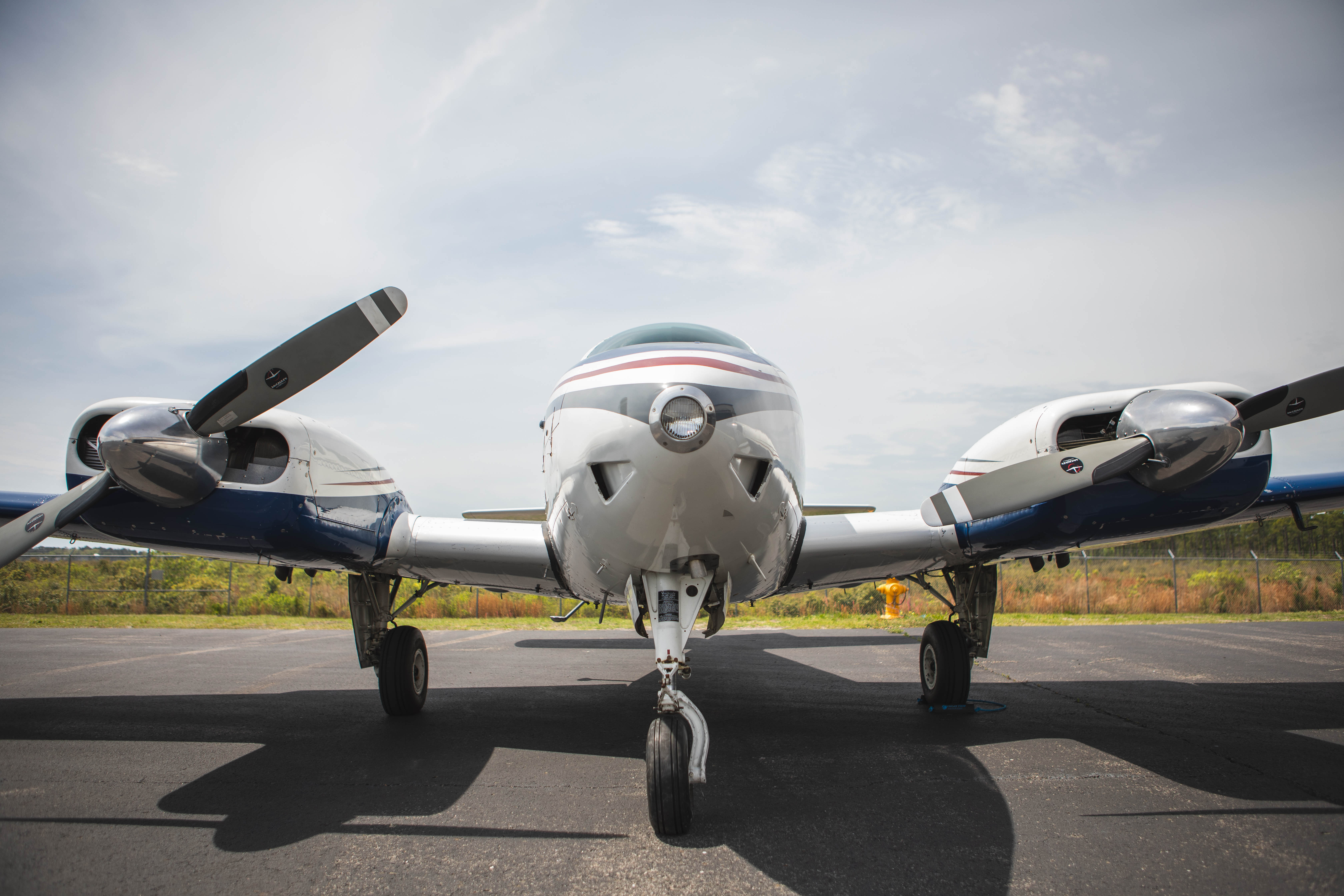
Expect the first flights to feel busier than your usual trainer. There are two sets of engine controls, more systems to monitor, and higher speeds to plan around. That extra workload is the point: learning to stay ahead of the airplane is what makes the rating valuable. You can see our twins and the rest of the fleet on our fleet and rentals page.
What You Will Actually Practice in the Baron
Multi-engine training covers the full flight, from walkaround to shutdown, with extra attention on what changes when one engine quits. Here is what our curriculum includes:
| Training area | What it looks like in the airplane |
|---|---|
| Preflight and airport operations | Inspecting two engines and their systems, then taxi and runup in a heavier, faster airplane |
| Takeoffs, landings, and navigation | Higher approach speeds, stabilized approaches, and flying the G500 with confidence |
| Multi-engine aerodynamics | Why the airplane yaws toward a failed engine and how you control it |
| Engine-failure procedures | Identifying the failed engine, securing it, and flying the airplane on one engine |
| Emergency and high-altitude operations | Working checklists under pressure and managing performance at altitude |
| VFR and IFR operations | Flying the twin in visual and instrument conditions as a certificate add-on |
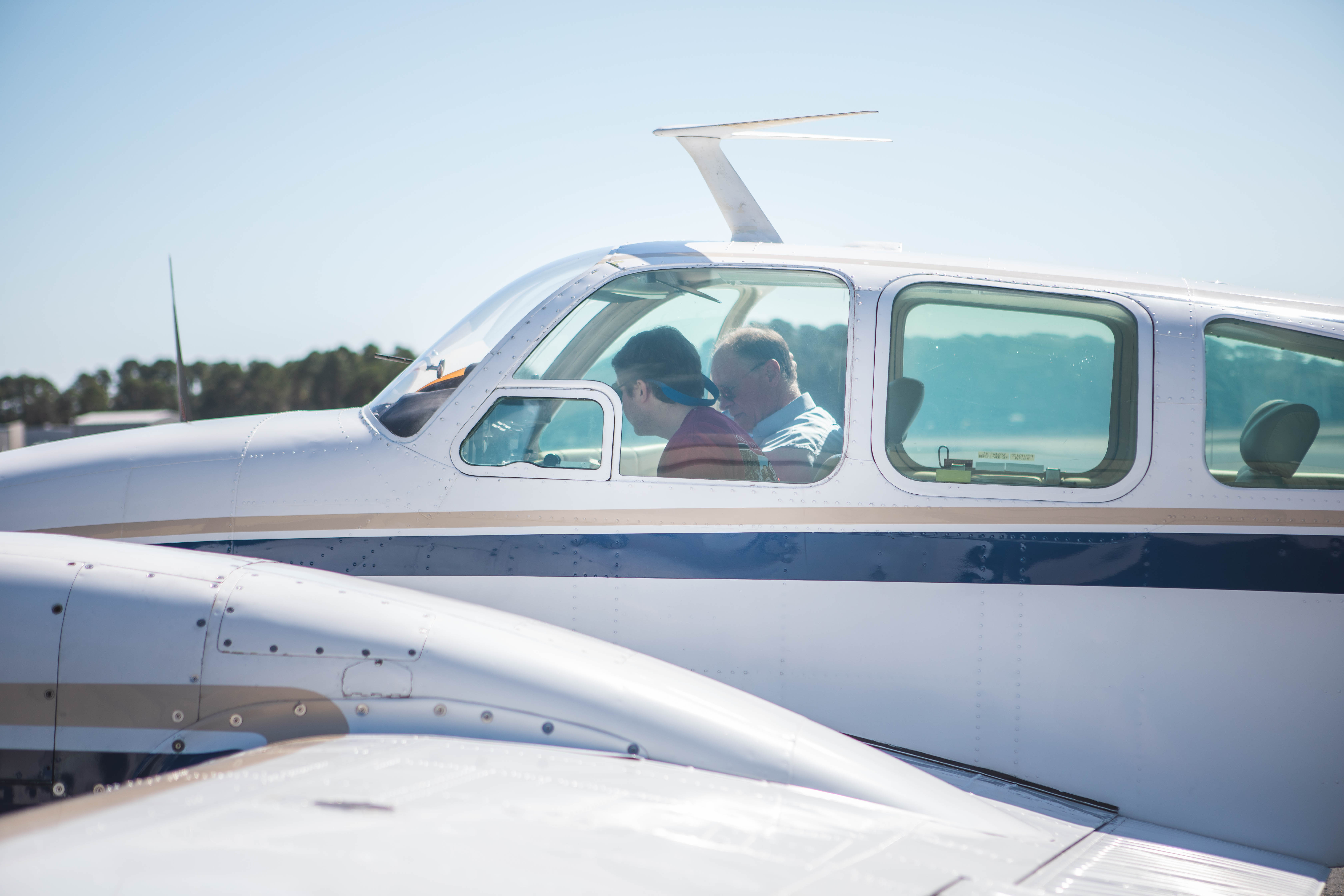
If you hold an instrument rating, the IFR portion will feel like a natural extension of what you already know. The engine-failure work is where most of the learning happens, and it is also where you will build the most confidence.
How the Oral and Checkride Work
Here is one of the most common surprises for pilots adding a multi-engine rating: there is no written knowledge test. You finish with an oral exam and a practical test, the checkride, where you show the examiner you can fly the airplane safely, including with an engine out.
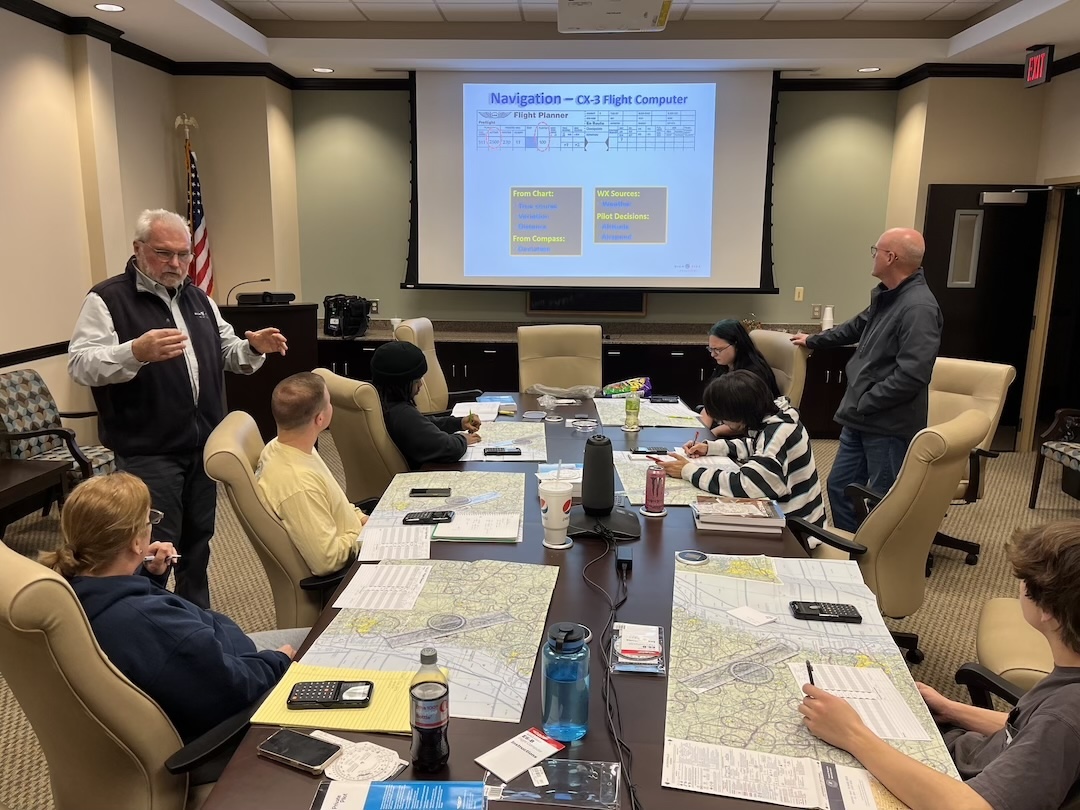
That makes ground preparation part of the flying. Before the oral, you should be able to explain the Baron’s systems, its performance numbers, and the aerodynamics of engine-out flight in your own words. Our ground school options and your instructor’s briefings help you get there, and our tips for checkride success apply here too.
What Multi-Engine Training Costs and How Long It Takes
Our multi-engine rating starts at $8,000, with dual training in the Baron at $650 per hour wet. Completion is based on proficiency, not an hourly minimum, so you move to the checkride when you are ready.
Our students average 10 to 12 hours of flight training. Your own total depends on your experience, how consistently you fly during the program, and weather. The one-to-two-week format helps here: flying on back-to-back days keeps each lesson building on the last.
Planning the budget is easier with support. Our financing options include resources such as AOPA Flight Training Finance, and you can compare costs across programs on our pricing page. If you already hold a commercial certificate, take a look at our current multi-engine rating package. Contact us to review exactly what your training price covers.
Where the Rating Can Take You Next
A multi-engine rating opens doors. Many pilots add it on the way to a commercial pilot certificate, and pilots who want to teach in twins can later work toward the MEI through our flight instructor program. Our guide to the CFI, CFII, and MEI path explains how that sequence fits together.
If you are planning the whole career path from the start, our Zero to Hero program builds a custom plan from private pilot through CFI, CFII, and MEI.
Frequently Asked Questions
Do I need a commercial certificate to start multi-engine training?
No. You need at least a Private Pilot certificate and a valid FAA medical. Our multi-engine program covers the full prerequisites.
Is there a written test for the multi-engine rating?
No. You complete an oral exam and a practical checkride. There is no FAA knowledge test for this add-on.
How long does multi-engine training take?
The program is built for one to two weeks of intensive training. Our students average 10 to 12 hours of flight time, and your pace depends on proficiency and weather.
Can I finance multi-engine training?
Many pilots use financing. Explore our financing resources to see which options fit your plan.
Start Your Multi-Engine Training in the Baron
You already know how to fly. Now it is time to learn how to manage two engines, handle an engine failure with confidence, and add a rating that expands where your flying can go. Our team is ready to build your one-to-two-week training plan in the Baron.


