Returning to Flying After Years Away: A Pilot's Planning Guide

Published by:
Jessica Ward
Published on:
Updated on:
Read time:
9 min read
Maybe the last entry in your logbook is from 2009. Maybe it is older than that. Life got busy, the airplane got sold, or the budget went to kids and a mortgage. Now you catch yourself looking up every time a Cessna crosses overhead. Returning to flying after years away is completely doable, and the pilots who do it well start with a plan instead of a guess.
Here is the short answer. Your pilot certificate does not expire. What lapses is your legal currency, your medical, and, most importantly, your hands-on sharpness. At High Tide Aviation, we have flown with pilots who have been out of the cockpit for decades, and our pilot proficiency training is built around where you are today, not where a syllabus assumes you should be. This guide walks you through each piece so your first flight back feels like a homecoming.
Currency Gets You Legal. Proficiency Gets You Comfortable.
These two words get used interchangeably, and they should not be. Currency is the regulatory minimum you must meet to act as pilot in command or carry passengers. Proficiency is whether you can actually fly the airplane well on a gusty afternoon with a busy frequency in your headset.
A pilot can be perfectly legal and still feel behind the airplane. After a long break, plan for proficiency first, and currency usually comes along naturally. That mindset is why our Rusty Pilot Recurrent training starts with your goals and experience rather than a fixed hour count.
| Requirement | What it covers | How often |
|---|---|---|
| Flight review (14 CFR 61.56) | Ground and flight training with an authorized instructor | Every 24 calendar months to act as PIC |
| Passenger currency (61.57) | 3 takeoffs and landings in the same category and class | Preceding 90 days |
| Night passenger currency | 3 full-stop takeoffs and landings at night | Preceding 90 days |
| Instrument currency (61.57(c)) | 6 approaches, holding, intercepting and tracking courses | Preceding 6 calendar months |
| Medical or BasicMed | Medical qualification for most airplane operations | Varies by class, age, and path |
The Flight Review Is Your Gate Back to the Left Seat
For most returning pilots, the flight review is the gate back to acting as pilot in command. Under 14 CFR 61.56, it includes at least one hour of ground training and at least one hour of flight training with an authorized instructor. Those are minimums. After years away, expect the review to take more than one flight, and that is normal.
The ground portion covers current operating rules, and the flight portion covers the maneuvers and procedures your instructor chooses to confirm safe operation. There is no pass or fail grade. Your instructor signs the logbook endorsement once your flying meets the standard. If it is not there yet, you simply keep training. Pilots who have completed a phase of the FAA WINGS program can also satisfy the flight review that way.
We like to treat the first session as a baseline flight: see what came back quickly, what feels rusty, and build your custom recurrent plan from there.
If You Held an Instrument Rating, Plan for an IPC
Your instrument rating does not go away either, but instrument currency lapses fast. You need six approaches, holding, and intercepting and tracking courses within the preceding six calendar months to fly under IFR. If you miss that window, you get another six months to catch up with a safety pilot or appropriate device. After that, you need an Instrument Proficiency Check (IPC) with a qualified instructor or examiner.
If it has been years, plan on the IPC. Many returning pilots pair the flight review and instrument refresher in the same stretch of training so the work builds on itself. Our instrument rating training instructors can help you sort out which tasks to rebuild first, since modern GPS approaches may look very different from what you last flew.
Sort Out Your Medical Before You Book Airplane Time
Medical planning is the step to handle early, before you invest in lessons. For most private pilots, a third-class medical is generally valid for 60 calendar months if you were under 40 on the exam date and 24 calendar months if you were 40 or older.
BasicMed is another path for many returning pilots. It generally requires a valid U.S. driver’s license, having held an FAA medical certificate at some point after July 14, 2006, an online medical education course, and an exam with a state-licensed physician. It also carries operating limits on aircraft size, passengers, altitude, and speed. You can review the details on the FAA BasicMed page.
Talk to an Aviation Medical Examiner about any condition or medication questions. That conversation belongs with an AME, and settling it early keeps your return-to-flight plan moving.
One more housekeeping item: paper pilot certificates stopped being valid after March 31, 2010. If yours is still paper, order a plastic replacement through FAA Airmen Certification before your first lesson.
Use the Simulator to Shake Off Rust Without the Meter Running
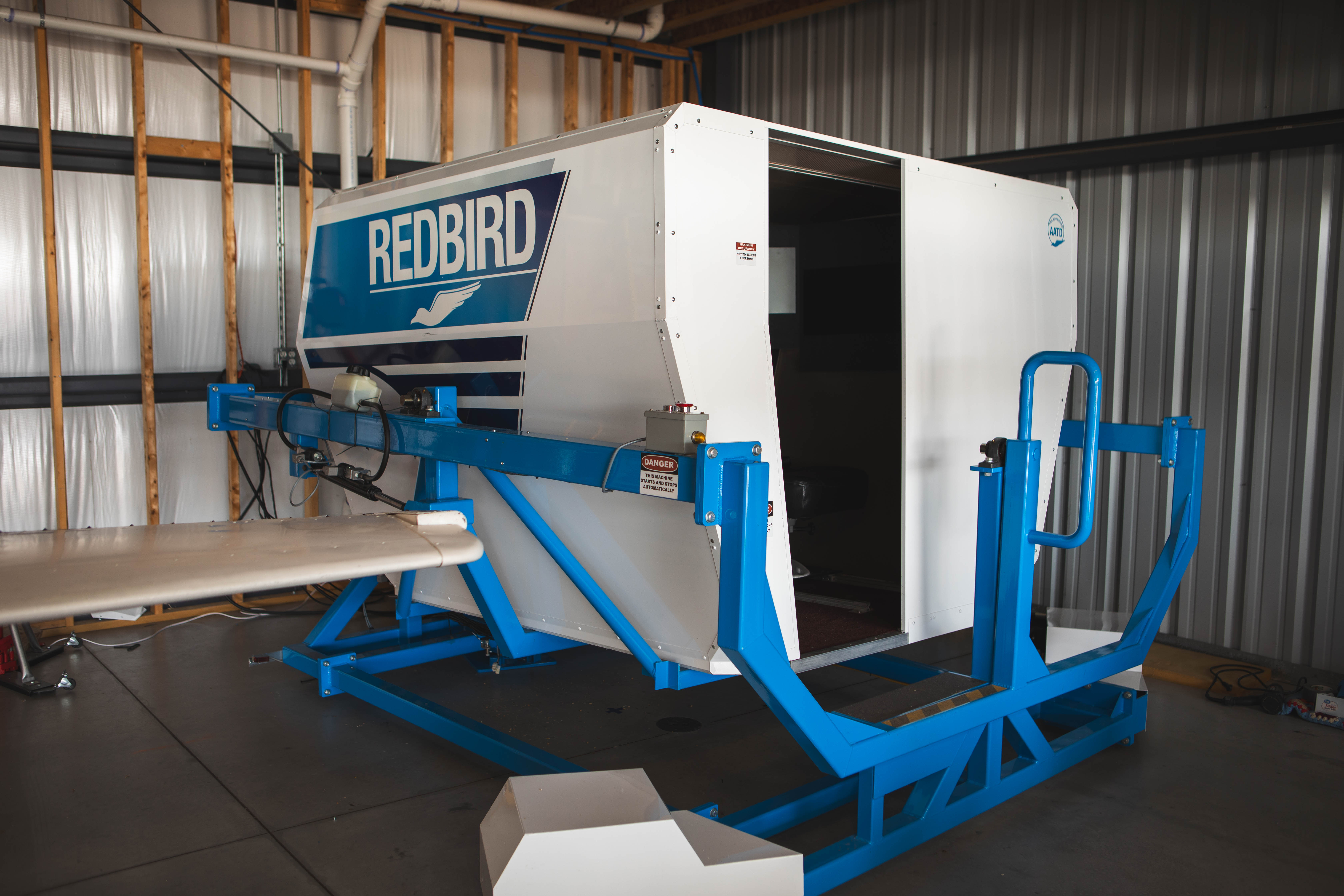
A lot of rust is procedural: checklist flows, radio calls, and instrument scan. Those are perfect jobs for a simulator. In our Redbird FMX simulator in Southport, you can rehearse a traffic pattern, brief an approach, or practice an engine failure, then pause, reset, and try again.
That repetition means your airplane time goes further, because you arrive at the aircraft with the flows already back in your hands. Whether any simulator time counts toward a specific requirement depends on the device’s approval and how the session is used, so we treat the sim as a proficiency tool first and plan any logged credit with your instructor.
Expect the Cockpit and the Airspace to Look Different
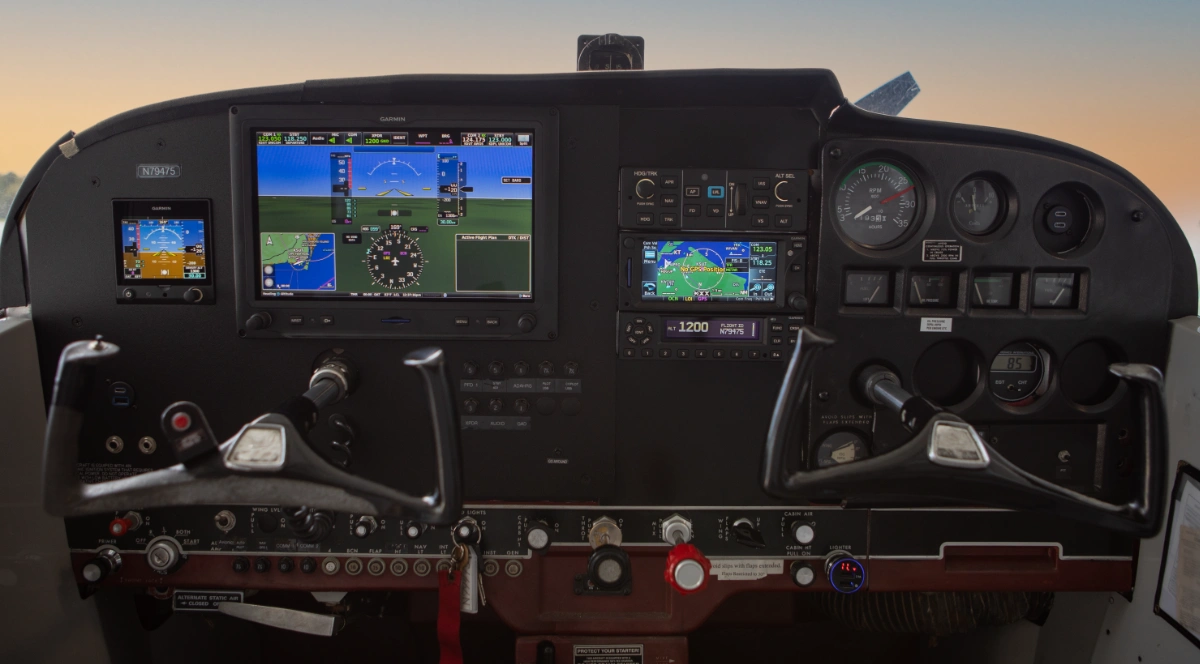
If you learned on round gauges and a VOR, a modern panel can feel like a new airplane. One of our Cessna 172s, N79475, flies with a Garmin G3X Touch display, a G5 attitude indicator, a GTN 650 GPS/NAV/COMM, and a GFC 500 autopilot. It still flies like a 172, but the buttonology is a skill of its own, and learning it with an instructor beats learning it on your first solo trip.
The system around you changed too. ADS-B Out has been required in much of the controlled airspace since January 1, 2020, electronic flight bags have replaced paper charts for many pilots, and weather briefings look different. Part of your ground session should cover what changed since you last flew. When you are ready to fly on your own, our aircraft rental options include both classic and glass-panel Cessnas, each with a checkout.
Build a Return Plan That Fits Your Goals and Budget
Every returning pilot has a different finish line. Some want to take their family to the beach for lunch. Others want to fly their own Bonanza or Baron again, or restart an instrument or commercial path. Your goal shapes which airplane you train in, how much instrument work you need, and when a flight review endorsement is enough versus when more training makes sense.
A simple way to plan:
- Gather your paperwork: logbooks, certificate, and medical status.
- Settle the medical path with an AME or through BasicMed.
- Refresh the knowledge with a ground session or a free outside resource like the AOPA Rusty Pilots program.
- Fly a baseline lesson and let your instructor shape the plan.
- Complete the flight review, and an IPC if you want to fly IFR.
Cost depends on how many flights you need, which is why we do not quote a fixed return-to-flight package. If you want to spread the investment out, our financing resources are worth a look before you start.
Frequently Asked Questions
Does my pilot certificate expire if I stop flying?
No. Your certificate stays valid, but you need a current flight review and, for most flying, medical qualification to act as pilot in command. See our pilot proficiency training to plan your return.
How many hours will it take to get back to flying?
There is no set number. The flight review minimum is one hour of ground and one hour of flight, but after a long break most pilots need more. Your baseline lesson tells us much more than a calendar.
Can I use BasicMed instead of a medical certificate?
Many returning pilots can if they held an FAA medical after July 14, 2006 and meet the other requirements. An AME is the right person for eligibility questions.
Does an IPC replace my flight review?
They are different requirements. An IPC restores instrument currency, while the flight review covers pilot-in-command privileges. Your instructor can plan training so both happen efficiently.
Should I start in the simulator or the airplane?
Often both. The Redbird FMX simulator is ideal for procedures, and the airplane is where stick-and-rudder skills return.
Is AOPA Rusty Pilots the same as a flight review?
No. Rusty Pilots is an AOPA ground seminar, and it can be a great knowledge refresher before your flight review with an instructor.
Tell Us Where You Left Off
You already did the hard part years ago when you earned your certificate. Coming back is about rebuilding confidence one flight at a time, with an instructor who meets you where you are. Tell us about your logbook, your goals, and the airplane you want to fly, and we will help you build a plan to get back in the left seat.